

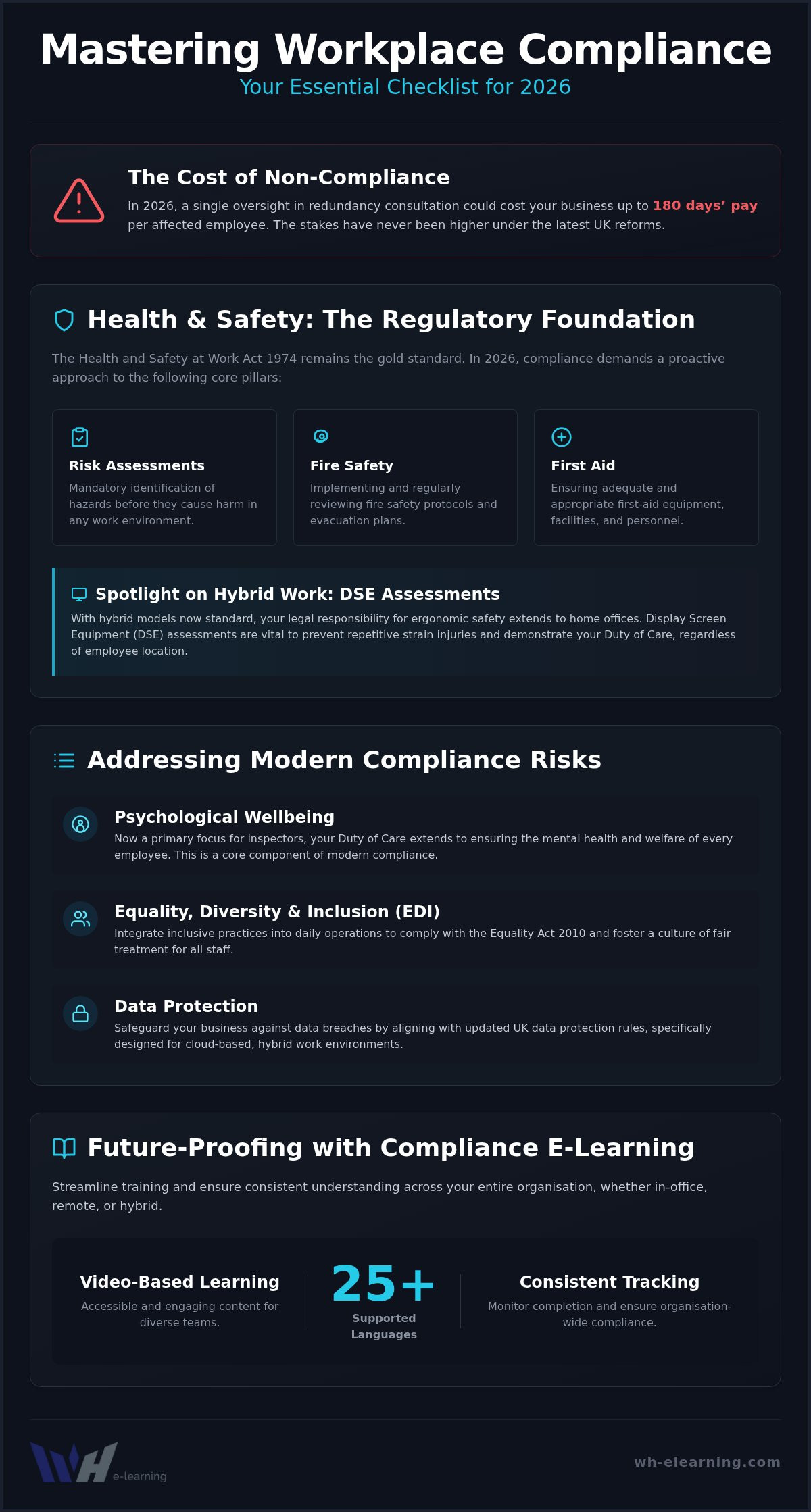
In 2026, a single oversight in redundancy consultation could cost your business up to 180 days’ pay per affected employee. It's a sobering figure. This highlights how high the stakes have become under the latest UK reforms. You likely feel the weight of these shifting regulations, especially when trying to maintain high standards across a hybrid workforce. It's natural to worry about the complexity of new day-one rights or the expanded Right to Work scheme. This comprehensive workplace compliance checklist is designed to remove that friction, providing you with a reliable partner in your organisation's professional growth.
We understand that your time is precious. Because of this, we've distilled the most critical legal updates into an actionable plan. This guide promises to help you master your 2026 obligations, ensuring you protect both your employees and your reputation. We'll explore the essential changes to Statutory Sick Pay, the new proactive duties regarding workplace harassment, and the latest data protection rules. You'll gain a clear roadmap that reduces administrative stress. Ultimately, this builds a more inclusive, safer workplace culture for everyone.
Key Takeaways
- Navigate the shifting 2026 regulatory landscape by identifying core health and safety requirements, including mandatory risk assessments and first-aid protocols.
- Use our comprehensive workplace compliance checklist to audit your current policies and ensure your organisation meets the latest legal standards for 2026.
- Address modern compliance risks by integrating psychological wellbeing and inclusive Equality, Diversity, and Inclusion (EDI) practices into your daily operations.
- Safeguard your business against data breaches by aligning with updated UK data protection rules designed for a cloud-based, hybrid work environment.
- Streamline training across diverse teams using accessible, video-based e-learning that supports over 25 languages and ensures consistent compliance tracking.
What is Workplace Compliance and Why is it Critical in 2026?
Workplace compliance is the active process of aligning your business operations with the laws, regulations, and ethical standards specific to your sector. It isn't just a box-ticking exercise. It's the foundation of a healthy organisation. In 2026, the definition has expanded significantly. It now encompasses not just physical safety, but also digital security and the psychological wellbeing of your team. Using a robust workplace compliance checklist helps you stay ahead of these requirements whilst protecting your most valuable assets: your people.
The current year has brought unique challenges. With the hybrid work model firmly established, compliance now follows your employees into their home offices. Digital safety is no longer just an IT concern; it's a core compliance pillar. Additionally, psychological wellbeing is now a primary focus for inspectors. Failing to meet these standards carries a heavy cost. This includes significant legal fines, increased insurance premiums, and the inevitable loss of top-tier talent who prioritise safety and ethics. To manage this effectively, you need a "Living Checklist" that evolves alongside your organisation and the legislative environment.
The Legal Framework: HSE and Beyond
The Health and Safety Executive (HSE) remains the primary regulator for workplace safety in the UK, conducting inspections and enforcing standards. However, modern governance requires a broader view. The Equality Act 2010 ensures fair treatment for all, whilst the latest iterations of GDPR protect the vast amounts of data generated in our cloud-based world. For a deeper dive into these foundations, you can review this UK labour law overview. In 2026, your Duty of Care means taking all reasonable steps to ensure the physical and mental health, safety, and welfare of every person in your employment.
The Business Case for High Standards
High standards pay dividends beyond legal safety. Robust compliance programmes are proven to improve employee retention. People stay where they feel protected. Proactive risk management reduces workplace incidents, which directly protects your bottom line. Integrating workplace compliance training into your routine builds a resilient culture where every staff member understands their role in safety. It transforms compliance from a burden into a competitive advantage and a simple path to professional growth. It feels like a sophisticated way to value long-term investment over simple transactions.
Health and Safety Compliance: The Regulatory Foundation
The core of any reliable business operation rests on the Health and Safety at Work Act 1974. This legislation remains the gold standard for protecting your team. To meet these standards in 2026, you must prioritise three core pillars: risk assessments, fire safety, and first aid. These aren't just administrative tasks. They're essential life-saving measures. Identifying hazards before they cause harm is the first step on any robust workplace compliance checklist. It's about creating an environment where safety is woven into the fabric of the working day.
Modern teams often split their time between the office and the spare bedroom. This shift makes DSE (Display Screen Equipment) assessments more vital than ever. You're legally responsible for your employees' ergonomic safety, regardless of where they log in. Implementing DSE assessment training online allows your hybrid staff to self-assess their setups. It reduces the risk of repetitive strain injuries and demonstrates your commitment to their long-term health. This proactive approach simplifies a complex requirement, making it easy for both the employer and the employee.
Accredited Training: IOSH Standards
Competence is the backbone of safety. Accredited training ensures your team doesn't just know the rules but understands how to apply them. IOSH (Institution of Occupational Safety and Health) provides the globally recognised benchmark for this. Deciding between IOSH Managing Safely vs Working Safely depends on the individual's level of responsibility. Whilst "Working Safely" is perfect for all staff, "Managing Safely" empowers your leaders to embed safety into their daily decisions. Online delivery makes this consistent across multiple sites, removing the friction of scheduling face-to-face sessions.
High-Risk Compliance Essentials
Specific hazards require focused attention. Fire safety involves more than just hanging an extinguisher. You need regular drills, designated marshals, and accredited training for those in charge. For industries dealing with asbestos or heavy lifting, manual handling protocols are non-negotiable. Utilising specialised occupational safety and health training courses ensures your high-risk operations remain legally sound. It's a proactive way to manage danger and protect your brand reputation. If you're looking to simplify this process, our comprehensive training library offers a seamless path to meeting these high standards.
HR, Diversity, and Data: Modern Compliance Risks
Whilst physical safety is foundational, your workplace compliance checklist must also address the human side of your organisation. In 2026, Equality, Diversity, and Inclusion (EDI) have moved from optional initiatives to core legal requirements. For example, as of 30 October 2026, employers have a strengthened duty to take all reasonable steps to prevent sexual harassment. This shift demands a proactive culture where every staff member feels safe and respected. Failing to prevent bullying or harassment doesn't just damage morale; it opens your business to significant legal liability and tribunal claims.
Supporting your leadership team is a vital part of this process. Managers are often the first point of contact for staff facing difficulties. This makes mental health training for managers a high priority for 2026. It empowers them to spot early signs of burnout or distress, ensuring your business remains a supportive environment that attracts and keeps top talent. It's about building a resilient culture where professional growth and wellbeing go hand in hand.
Inclusive Training and Accessibility
Inclusive training is no longer a luxury. It's a necessity for any modern business. Utilising e-learning with closed captions ensures your training is accessible to everyone, including those with hearing impairments or those working in noisy environments. If you manage a global team, multi-language e-learning courses are essential. Machine translation has improved significantly, allowing you to provide high-quality training in over 25 languages. This removes barriers for non-native speakers and ensures every employee understands their rights and responsibilities clearly.
Data Protection and GDPR
Data protection continues to evolve as technology advances. The Data (Use and Access) Act 2025 introduced mandatory complaints handling on 19 June 2026. You must follow the Guide to the UK GDPR to ensure you're handling personal data correctly in our cloud-based world. Annual staff training is the best way to prevent accidental breaches. Adding data security to your workplace compliance checklist ensures your hybrid workforce remains a strength rather than a vulnerability. Your remote working policy should include a checklist for secure behaviours, such as using encrypted connections and identifying phishing attempts immediately.
The 2026 Workplace Compliance Checklist: Your Step-by-Step Guide
Transforming your strategy into a functional workplace compliance checklist ensures no detail is missed. It's a simple path to protecting your organisation. Follow these five steps to build a safer, more efficient organisation in 2026.
- Step 1: Conduct a Comprehensive Risk Assessment. You must evaluate both physical and psychological hazards. In 2026, psychological safety is a primary focus for regulators, so ensure your assessment covers stress and burnout risks amongst your team.
- Step 2: Review and Update Workplace Policies. Your Employee Handbook and H&S Policy must reflect current laws. This includes the April 2026 changes to Statutory Sick Pay and the new day-one rights for paternity leave.
- Step 3: Identify Training Gaps. Compare your current staff skills against mandatory requirements. Distinguish between accredited training, like IOSH, and internal awareness sessions to prioritise your budget effectively.
- Step 4: Implement a Scalable Training Solution. Use e-learning to maintain consistency across hybrid teams. This ensures every worker receives the same high-quality information regardless of their location.
- Step 5: Audit and Document. Tracking progress is your best evidence of due diligence. Keep detailed records of training completion and policy acknowledgements to satisfy the new Fair Work Agency inspectors. Using a digital workplace compliance checklist makes this documentation seamless and reliable.
Quarterly Compliance Actions
Maintain your momentum with regular check-ins. Reviewing incident logs and "near miss" reports every three months helps you spot patterns before they become accidents. You should also test fire alarms and emergency lighting systems to ensure they're fully operational. Finally, check training expiry dates for IOSH or First Aid certifications. This prevents accidental lapses in your legal coverage and keeps your team's skills sharp.
Annual Compliance Reviews
Once a year, you need a deeper dive into your operations. Conduct a full policy audit against the latest 2026 legislative updates to ensure your handbook remains a "living document". This is also the perfect time to renew your business compliance e-learning licences for the whole team. For ultimate peace of mind, consider commissioning an annual "Compliance Health Check" from a third-party expert to identify any blind spots. Start your journey toward total compliance today when you explore our accredited course library.
Future-Proofing Your Strategy with Compliance E-Learning
Static documents and spreadsheets are no longer enough to manage the complexities of modern business. To truly future-proof your organisation, you need a dynamic approach that moves beyond a simple workplace compliance checklist saved on a hard drive. Video-based learning has emerged as the clear winner over text-heavy modules. It captures attention and improves knowledge retention amongst busy professionals. By replacing dense blocks of text with engaging visual content, you ensure your team doesn't just scroll through the training but actually absorbs the material.
Inclusivity is a major legal driver in 2026. Because of this, machine translation in over 25 languages ensures no employee is left behind. This is particularly vital for organisations with diverse or global workforces where English might not be the first language. Coupling this with closed captions makes your training truly accessible. It’s a seamless way to meet your ethical obligations whilst maintaining high standards across the board. Bulk corporate licensing makes this high-end experience attainable for growing businesses, allowing you to scale your safety culture efficiently without a massive administrative burden.
Audits can be stressful, but they don't have to be. Digital dashboards provide instant, verifiable proof of compliance for any inspector. Instead of hunting through filing cabinets, you can present a clear, real-time record of every staff member's progress. This level of transparency is a powerful tool for any leader. It turns your workplace compliance checklist into a living evidence log of your due diligence and commitment to safety.
Scalability for Global Teams
Managing training across different time zones is a significant hurdle for many firms. Online e-learning removes this obstacle entirely. You can deploy consistent, high-quality information to every staff member simultaneously without the logistical nightmare of face-to-face sessions. Industry specialists design these video-based assessments to ensure they're practical and relevant. This guarantees that a manager in London and a supervisor in a remote hub receive the same gold-standard instruction, creating a unified culture of competence.
Choosing the Right Compliance Partner
Selecting the right partner is critical for legal validity. Always look for accredited courses, such as those recognised by IOSH or CPD, to ensure your training meets official standards. In our mobile-first world, you should also prioritise platforms that offer multi-device access. This empowers your workforce to learn on the go, whether they're on a tablet in the field or a laptop at home. It's about removing friction and making progress feel easy. You can explore the WH eLearning course library to automate your compliance today and build a simplified path to professional excellence.
Securing Your Organisation's Future
Mastering the 2026 regulatory landscape doesn't have to be a source of stress. By integrating physical safety with modern priorities like psychological wellbeing and data protection, you create a workplace where employees feel truly valued. This proactive approach protects your reputation and your bottom line. Using a structured workplace compliance checklist ensures you stay ahead of legislative changes whilst fostering a culture of continuous professional growth.
Evidence-based training is your strongest defence against the risk of non-compliance. As an accredited IOSH training provider, we help you remove the friction from staff development with over 100 expert-led video courses. These resources are used by global organisations for multi-language compliance, ensuring every team member is included regardless of their location. You can simplify your training and protect your business with WH eLearning today. Embrace these high standards as a facilitator of your success rather than a burden to manage. You've got the tools to lead with quiet confidence and build a safer, more inclusive future for your entire organisation.
Frequently Asked Questions
What are the three main areas of workplace compliance?
The three main areas of workplace compliance in 2026 are Health and Safety, HR/Employment Law, and Data Protection. Health and Safety covers physical risks and psychological wellbeing. HR compliance focuses on employee rights, including the new 2026 day-one paternity leave and harassment prevention duties. Data Protection involves following the UK GDPR and the Data (Use and Access) Act 2025. Together, these form the core of a comprehensive workplace compliance checklist for any UK business.
Is a workplace compliance checklist a legal requirement in the UK?
Whilst a specific workplace compliance checklist isn't a standalone legal requirement, the regulations it covers certainly are. Using a checklist is the most reliable way to demonstrate due diligence to the HSE or the Fair Work Agency. It ensures you don't overlook mandatory duties like fire safety drills or the April 2026 Statutory Sick Pay updates. Failing to document these actions makes it difficult to prove your organisation has met its legal obligations during an audit.
How often should a workplace compliance audit be conducted?
You should conduct a full policy audit annually to align with new legislative updates, such as the employment law changes taking effect in October 2026. However, specific checks require more frequent attention. We recommend quarterly reviews for incident logs, training expiry dates, and fire safety equipment. This rhythmic approach prevents administrative burdens from piling up. It ensures your safety standards remain high throughout the year rather than just before an inspection.
Can online training count towards legal compliance certification?
Yes, online training is a valid and efficient way to meet legal requirements, provided the courses are accredited by recognised bodies like IOSH. Video-based learning with digital assessments offers a robust paper trail for auditors. It confirms that staff haven't just seen the material but have understood it. WH eLearning provides accredited certification that proves your team has reached the necessary standards of competence in a scalable, verifiable format.
What happens if a business fails to meet HSE compliance standards?
Failing to meet HSE standards can result in severe penalties, including unlimited fines and criminal prosecution for directors. The HSE also operates a "Fee for Intervention" scheme, charging businesses for the time spent investigating breaches. Beyond legal costs, non-compliance leads to higher insurance premiums and significant reputational damage. In 2026, the new Fair Work Agency also has the power to enforce worker rights, making it more critical than ever to stay compliant.
How do I manage compliance for remote or hybrid employees?
Managing compliance for a hybrid workforce requires extending your safety protocols into the home office. You must provide DSE assessments for remote setups and ensure staff follow secure data handling behaviours. Digital training is the most effective tool for this, as it allows every worker to access the same high-quality information regardless of their location. Regular check-ins on psychological wellbeing are also essential to meet your 2026 duty of care for remote employees.
What is the most important health and safety course for managers?
IOSH Managing Safely is widely considered the gold standard for managers across all sectors. This course provides a practical overview of risk management and legal responsibilities, empowering leaders to embed safety into their daily decisions. It bridges the gap between high-level policy and practical application. For staff without management duties, IOSH Working Safely offers a foundational understanding of hazards. Both courses are essential components of a proactive and resilient workplace culture.
How does multi-language training improve workplace safety?
Multi-language training significantly reduces the risk of accidents by ensuring every employee fully understands safety instructions. In a diverse workplace, providing courses in a worker's native language removes the barriers of complex jargon and prevents dangerous misunderstandings. WH eLearning offers machine translation into over 25 languages, ensuring that inclusive training is accessible to everyone. This approach doesn't just meet legal EDI requirements; it builds a safer environment where no one is left behind.


