

The strongest non-financial returns from safety training come when employees can recognise hazards, work safely and speak up about risks. The non-financial benefits of safety training include greater confidence and wellbeing, fewer incidents, less disruption and a stronger safety culture.
Look beyond the training session itself: what matters is whether people can apply what they learn in their day-to-day roles. Training is most effective as part of a wider approach that listens to employees and makes safe working a shared priority.
This article explains how safety training can support wellbeing, help prevent incidents and reduce disruption, while building a workplace where safety is part of everyday behaviour. It also explores why relevant, practical learning is a useful starting point for a more confident and consistent approach to safety.
Key Takeaways
- See how practical safety learning can help employees feel more confident and supported in their roles.
- Learn why helping staff recognise hazards and work safely can prevent incidents and interruptions.
- Explore how open communication and shared responsibility can make safety part of everyday workplace culture.
- Understand how relevant training can help teams respond to risks and keep work moving after an incident.
Employee health, happiness, and reduced anxiety
Employees feel better prepared when training connects hazards with the tasks they actually perform. For example, a new warehouse worker can learn to spot an obstructed aisle and report it before moving stock. Clear guidance explains what to do, whom to tell and how to protect colleagues. This practical knowledge can reduce uncertainty during routine work and show that wellbeing is part of the safety programme, not an afterthought. When a hazard report receives a positive response, employees learn that raising concerns is useful, not troublesome.
Safety can also shape recruitment and job-offer decisions. A candidate weighing two similar roles might favour the employer that clearly explains its induction, protective procedures and reporting channels. Specific examples carry more weight in an interview than a general promise of a safe workplace. Explain how employees learn about hazards before starting a task and how supervisors respond to concerns. This makes the employer’s approach visible to applicants and clarifies new starters’ responsibilities from day one.
Changes to workflow can prompt resistance, especially when employees think a new step will slow the job. For example, a pre-use equipment check is more likely to be accepted when staff understand which hazard it addresses and can raise practical concerns. Supervisors can demonstrate the process, invite feedback and explain what happens after an issue is reported. This makes change more collaborative. Employees are more likely to follow procedures they understand and have had a chance to discuss.
Consistent protection can support staff retention and an employer’s reputation. Employees who see hazards addressed rather than repeatedly ignored have reason to trust organisational decisions. Everyday behaviour shapes reputation more than a slogan, including in conversations with colleagues and prospective recruits. The benefit is not just financial: fewer unresolved concerns can help create a steadier, more confident team. Safety training does not itself determine insurance premiums, but it gives employees a shared language for recognising risks and speaking up before work continues.
Incident prevention and productivity disruption
Safety training helps workers recognise risks and choose safer ways to complete tasks. On a construction site, for example, workers can learn site procedures before equipment or materials are moved.
Accident-related downtime
Accident-related downtime is working time lost because of an incident and its follow-up. A construction site may need to pause a task, isolate equipment and rearrange a crew after an injury. Other workers may lose time while supervisors respond and inspections take place. Training supports a consistent response by helping workers spot hazards, follow safe procedures and report problems promptly. This can limit disruption and help teams resume work with clearer information.
Operational efficiency
Operational efficiency means completing work reliably while using people, equipment and time effectively. Safety training can support this by clarifying how tasks should be done and when work should stop because of a hazard. Workers who know the safe sequence for handling materials, for instance, can coordinate their roles instead of improvising. Consistent procedures also help supervisors identify processes that need attention. The aim is safer, more organised work, not speed at the expense of protection.
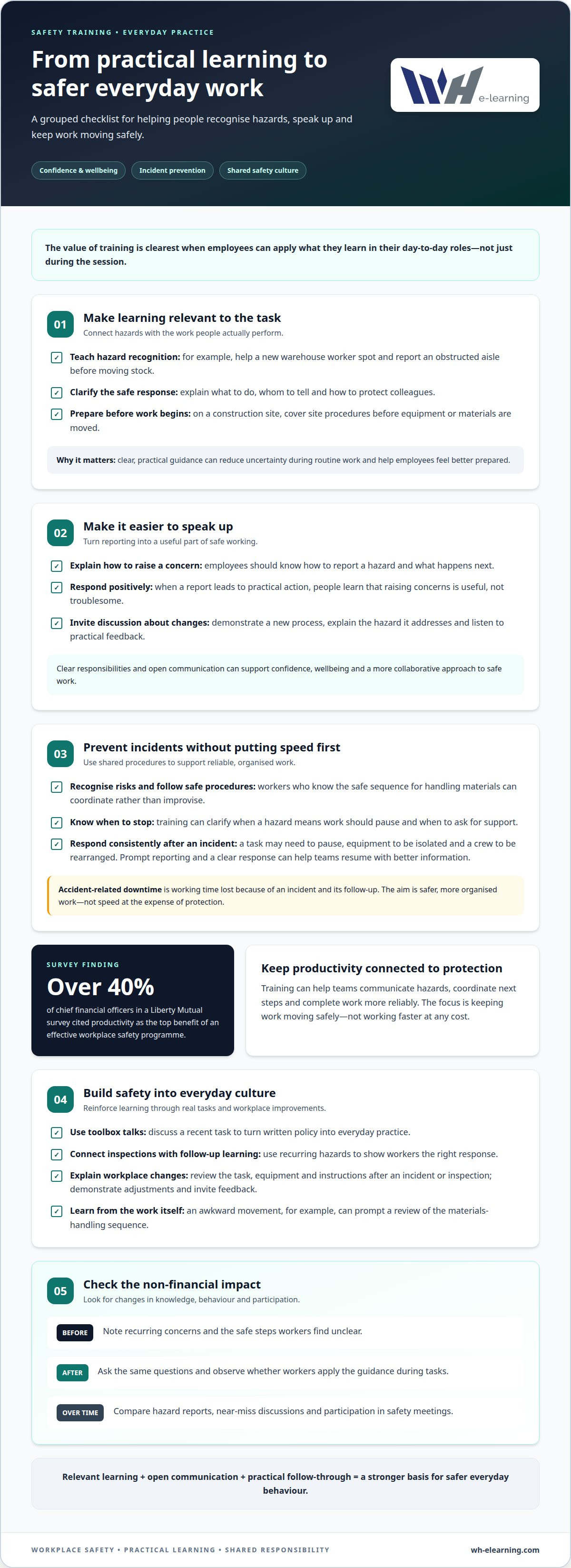
Confidence matters to productivity, too. When workers understand their responsibilities, they can raise a concern or ask for support before a small risk disrupts a task. Shared understanding also improves teamwork: colleagues can communicate hazards clearly and coordinate their next steps. A Liberty Mutual survey found that over 40 percent of chief financial officers cited productivity as the top benefit of an effective workplace safety programme. That finding reflects the value employers place on keeping work moving safely.
Inspections and training are most useful when they connect to everyday tasks. An inspection may identify a recurring hazard, while follow-up learning helps workers understand the right response. Supervisors can reinforce the lesson through brief team discussions and consistent feedback. This makes safety part of the working culture, not a separate exercise. It can also support morale: workers see reported risks lead to practical action, and teams have a clearer basis for completing tasks without avoidable interruptions.
Building a safety-focused workplace culture
A toolbox talk about a recent task can turn workplace safety from a written policy into everyday practice.
Preventing incidents and injuries
Training that teaches workers to identify hazards and respond safely can help prevent incidents. A missed warning may expose colleagues to avoidable injury. If training is inadequate or ineffective, workers may be unsure about hazards, safe procedures or when to stop. That confusion can contribute to unsafe actions, repeat incidents and delayed reporting. Leaders can reinforce learning by discussing a real task, demonstrating controls and inviting questions.
Training and workplace improvements
Safety training connects with workplace improvements when lessons lead to practical changes. After an incident or inspection, leaders can review the task, equipment and instructions involved. They can then explain the adjustment, show how it changes the process and invite feedback. For example, employees might identify an awkward movement, prompting a review of the materials-handling sequence. Explaining why the change matters helps teams apply consistent safety expectations across different industries.
Measuring non-financial impact
Employers can assess non-financial impact by tracking changes in knowledge, behaviour and participation. Before training, note recurring concerns and the safe steps workers find unclear. Afterwards, ask the same questions and observe whether workers apply the guidance during tasks. Over time, compare hazard reports, near-miss discussions and participation in safety meetings. This evidence helps leaders assess changes in confidence, coordination and consistent safe behaviour.
Leaders shape workplace culture through their response to concerns. If a worker reports a blocked exit, managers can record the issue, assign an action and tell the team how it was resolved. This visible follow-through connects training with daily decisions. In offices, warehouses and construction sites, the same process shows employees that workplace safety is a shared responsibility, not just a poster on the wall.
Reducing injury severity and workplace disruption
Safety training can help workers recognise an incident early and respond using clear workplace procedures. Prompt reporting lets supervisors address hazards, arrange support and review whether work should pause. For example, a worker who spots a damaged cable can report it before someone trips. Investing in that shared awareness may help limit injury severity and prevent a local problem from affecting nearby tasks.
Disruption can continue after an injury, as teams adjust schedules, redistribute tasks and review what happened. In 2025, U.S. employers paid more than $1 billion per week in direct workers’ compensation costs for disabling, non-fatal workplace injuries. Training cannot remove every risk, but it can help employees follow safe processes and raise concerns promptly. Fewer interruptions can mean less downtime for colleagues and more predictable operations.
Workplace injuries and illnesses can affect more than the person directly involved. A serious incident may require medical attention, an internal review and changes to how a task is done. Clear training helps workers understand reporting procedures and the importance of sharing accurate details. This gives managers useful information to address hazards and prevent similar events. It also helps colleagues understand what to do if someone needs assistance.
Ergonomic risks need practical attention. A worker who regularly lifts boxes, for instance, needs to recognise awkward movements and use the handling method taught for the task. Training can also show staff how to adjust a workstation, vary repetitive tasks where possible and report discomfort early. These habits support safer working and give managers a chance to examine the task itself, rather than treating each concern in isolation.
Claims and compensation are financial matters, but their human effects are immediate: uncertainty, altered duties and disrupted routines. Training that explains safe procedures, reporting routes and team responsibilities can make the response clearer. Supervisors can reinforce these lessons through a task briefing and a review after an incident. This supports a more organised response, with workers better prepared to protect themselves and colleagues.
WH eLearning: Health and Safety Training Courses
WH eLearning offers Health and Safety Training Courses to help employees build practical workplace knowledge and safer habits. Its library includes over 100 online courses, including health and safety, HR and business compliance topics. Courses are video-based, accredited and accessible on any device, with closed captions and machine translation into more than 25 languages.
Choose online learning when staff need flexible access, or consider In-House Face-to-Face Training for a group learning setting. Multi-language Course Translation can support teams who benefit from learning in different languages. These options help organisations make training more accessible and relevant to their workforce.
To explore training options for your team, contact WH eLearning.
Make safer working part of everyday practice
The non-financial benefits of safety training grow when learning continues beyond a single session. Match training to employees’ responsibilities, then reinforce the lessons through everyday conversations and clear procedures. This helps turn knowledge into habits teams can use as work changes.
For structured learning, WH eLearning offers comprehensive online leadership safety courses and staff safety awareness programmes, alongside specialist health and safety training options. Choose an option that reflects your organisation’s roles and learning needs. Relevant learning can help employees build confidence and make safer decisions as part of their work.
Explore the available options and discuss your organisation’s training needs. Contact WH eLearning to take the next step towards a more confident, safety-focused workplace.
Frequently Asked Questions
What safety investments give the best return?
Task-specific training paired with practical hazard controls is a strong place to start. Focus on work where conditions change, employees use unfamiliar equipment or tasks depend on careful handovers. For example, train staff on a revised cleaning process and provide clear instructions where the task takes place. This connects learning to daily work and helps teams apply it consistently, rather than treating training as a standalone event.
What are the non-financial benefits of workplace safety training?
The non-financial benefits of safety training include greater confidence, clearer communication and a stronger sense of support at work. A new starter who knows how to report a concern, for example, can take part more confidently in team routines. Training also gives colleagues a shared basis for discussing safe ways to complete tasks. These outcomes help make safety part of how people work together, rather than an isolated requirement.
How does safety training improve employee morale and job satisfaction?
Safety training can support morale by giving employees the knowledge to handle responsibilities and raise concerns constructively. Imagine a worker flagging a recurring issue during a team briefing. If a supervisor listens, explains the next steps and follows up, the employee can see that their input matters. This involvement can make work feel more supportive and strengthen satisfaction with how the organisation responds to staff.
How does safety training affect workplace culture and employee engagement?
Training can shape workplace culture by giving employees an active role in improving everyday work. A team might discuss a recent equipment change, identify where instructions need clarification and agree how to share updates with colleagues. Leaders support engagement by making time for these discussions and explaining decisions. Learning then becomes a two-way process, allowing employees to contribute their experience rather than simply receive instructions.
Can safety training reduce stress, fear and psychological harm at work?
Clear training can reduce uncertainty by explaining how to handle a task, raise a concern and find support. A worker facing an unfamiliar procedure, for instance, may feel more at ease after practising it and learning whom to approach with questions. Training should also explain how to report bullying, threats or other psychosocial hazards. Clear reporting routes help staff understand what action to take.
How does safety training improve communication and teamwork?
Training can improve teamwork by helping colleagues follow consistent instructions and understand how their tasks connect. Before a shift handover, for example, employees can practise sharing changes to equipment, work areas or procedures. Clear communication helps the next person understand what has happened and what needs attention. Short team discussions can also clarify responsibilities and reduce confusion when work passes between people or departments.


