

Safer work can strengthen morale and make safety protocols easier to follow. To understand how to improve employee morale with safety, involve employees in identifying risks, act on their concerns and provide clear, relevant training. These steps show that people’s wellbeing matters.
Safety isn’t just about rules and equipment. When employees feel protected and listened to, they’re more likely to trust their leaders, speak up about hazards and take part in safer ways of working.
This article explains why workplace safety matters and how morale and safety culture affect trust, retention and compliance. You’ll find practical ways to involve employees, reinforce safe behaviour and make training part of a supportive workplace. The aim is to build safety into everyday work, not treat it as a box-ticking exercise.
Key Takeaways
- Invite employees to identify hazards and share practical suggestions, then show how their feedback informs safety improvements.
- Recognise safe behaviour and useful safety ideas to encourage participation and reinforce shared responsibility.
- Build trust by making safety expectations clear, modelling them consistently and responding constructively to concerns.
- Use relevant training and open feedback channels to help employees understand protocols and speak up when something feels unsafe.
1. Why is Workplace Safety Important?
Workplace safety means identifying, assessing and controlling risks before they cause accidents, injuries or illness. Clear procedures, suitable equipment and practical training help employees understand how to work safely. When people see that attention is paid to their working conditions, they can feel more confident, supporting morale and productivity.
Employees often spot risks that managers cannot see from an office. Ask them to describe hazards in daily tasks, such as a slippery route or an awkward lifting process. A safety committee can review these observations, agree practical controls and report back on actions taken. This gives employees a meaningful role in shaping workplace culture.
Listening also affects engagement. When workers can raise concerns without fear of blame, they’re more likely to report near misses and suggest improvements. For example, a team might find that a procedure is unclear during a handover, then help make the steps easier to follow. Acting on feedback shows that safety is part of everyday work, not just a written policy.
The cost of safety improvements depends on the hazards and controls involved, such as equipment, training or changes to a work process. Proactive measures can help prevent injuries and reduce disruption, downtime and liability. Safer conditions also support morale and continued productivity.
Employers can assess safety culture and morale through surveys, interviews and feedback from safety committee meetings. Reviewing incident reports alongside absenteeism, turnover and productivity can reveal patterns that need attention.
Burnout, stress and mental health belong in safety discussions when workload or workplace practices affect employees’ wellbeing. Managers can review demands, listen to staff concerns and address confusing procedures or barriers. Flexible hours, remote-work options or wellbeing programmes can also support work-life balance where they suit the work.
Misaligned policies can make work needlessly difficult. Conflicting procedures may leave staff unsure which safety step to follow, while pressure to meet deadlines can encourage shortcuts. Identify these obstacles with employees, clarify responsibilities and adjust processes so safe work is practical throughout the working day.
2. How Does Morale Affect Work Safety?
Morale can affect how carefully employees follow procedures and respond to changing conditions. A tired or disengaged worker may overlook a warning, while a confident colleague is more likely to pause and speak up. In a positive work environment, recognising safe choices can foster shared responsibility without making safety feel like a punishment.
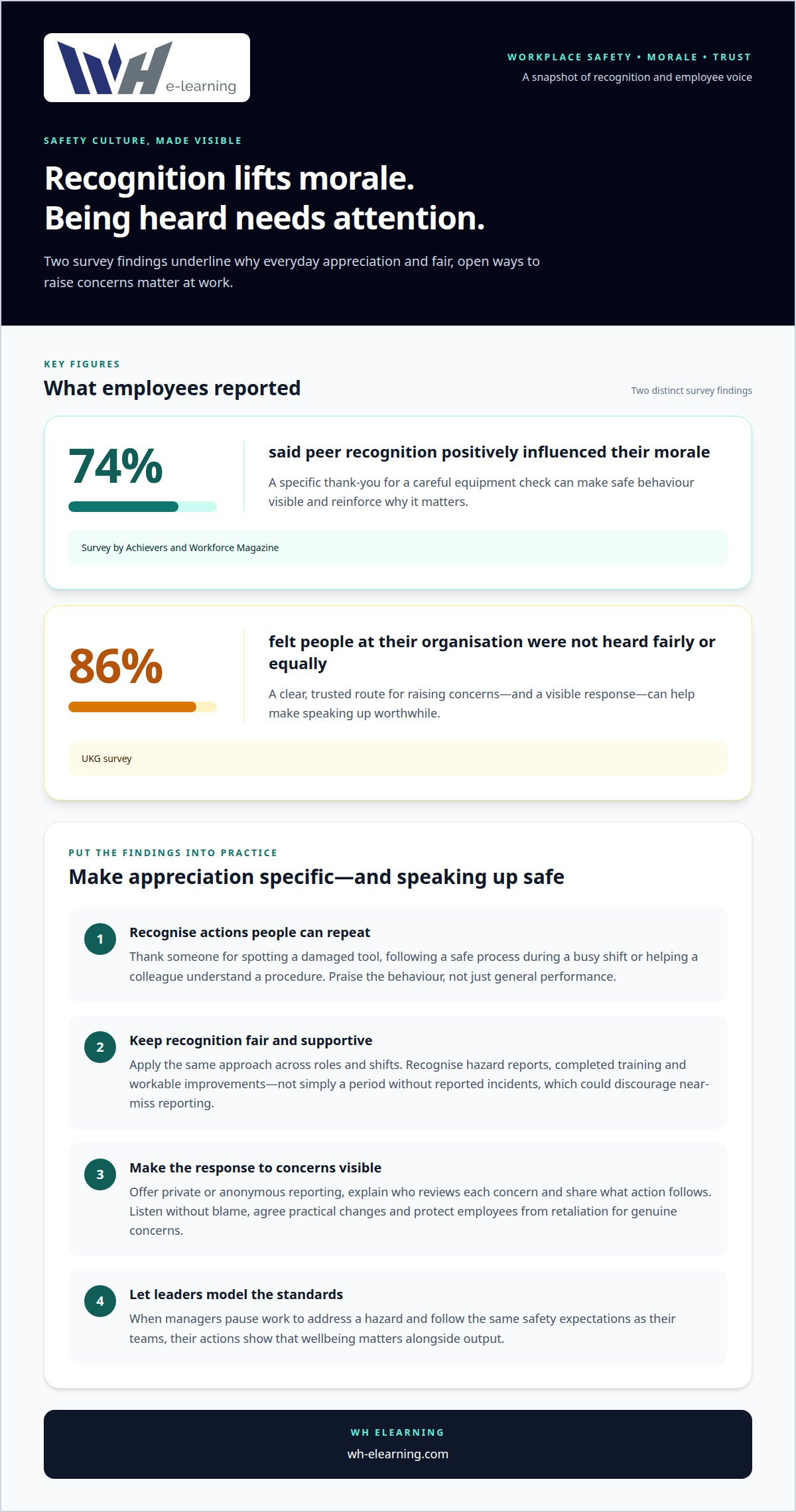
Recognition helps make safe behaviour visible. In a survey by Achievers and Workforce Magazine, 74% of employees said peer recognition positively influenced their morale. A colleague’s specific thanks, such as acknowledging a careful equipment check, can reinforce why that action matters. Employees feel valued when praise names the behaviour, not simply the person’s general performance.
Make recognition timely and fair. A manager could thank a worker for spotting a damaged tool, following a safe process during a busy shift or helping a new team member understand a procedure. These examples connect appreciation with actions others can repeat. Apply the same approach across roles and shifts, so recognition reflects safe work, not just visibility to senior staff.
Incentives can encourage participation, but design them carefully. Team milestones or a small shared reward can recognise consistent attention to safe practices. Avoid rewarding only a period without reported incidents, as employees might feel discouraged from reporting a near miss. Instead, recognise useful behaviours such as reporting hazards, completing training or suggesting a workable improvement.
Invite employees to nominate colleagues for safety contributions, then explain how nominations are considered. A regular acknowledgement can highlight both an individual achievement and a team effort, such as improving a handover checklist. This gives employees a clear way to celebrate each other and makes recognition part of workplace policy, rather than an occasional gesture.
Positive reinforcement works best when leaders model the standards they praise. Thank staff for stopping an unsafe task, explain the value of that decision and discuss what happens next. Review participation and employee feedback regularly to see whether recognition feels meaningful and reaches different teams. Keep rewards supportive, never a substitute for suitable procedures, equipment or training.
3. How safety culture affects morale, trust, and retention
Employees judge an organisation’s values by how leaders act when safety affects deadlines. If a manager pauses work to address a hazard, staff see that wellbeing matters alongside output. Consistent decisions can build trust, satisfaction and motivation. Ignored concerns, by contrast, can weaken engagement and make employees question whether leaders will support them.
A speak-up culture gives employees a clear way to report hazards, near misses and unsafe pressure. Offer private or anonymous reporting, explain who reviews each concern, and share what action follows. A UKG survey found that 86% of employees felt people at their organisation were not heard fairly or equally. Responding transparently helps make speaking up worthwhile.
Managers can build a positive, blame-free safety culture by treating reports as opportunities to understand risks and improve work. Ask what conditions contributed, listen to the people involved and agree practical changes. Protect employees from retaliation when they raise a genuine concern. Otherwise, silence can hide hazards and undermine trust.
Leadership accountability makes workplace safety part of organisational culture. Define who maintains equipment, communicates procedures and resolves reported risks, then ensure managers follow the same standards as their teams. For example, a supervisor who consistently wears required protective equipment reinforces expectations more clearly than a policy leaders ignore.
Make safety visible in routine decisions: include it in team briefings, onboarding, shift handovers and performance discussions. Invite employees to share improvements, and explain when suggestions change a process. Gallup research found that companies with highly engaged employees experience 70% fewer safety incidents. Engagement grows when leaders listen and follow through, not when safety is treated as a slogan.
To sustain trust and retention, review whether concerns receive timely attention and employees understand the actions taken. Discuss recurring themes with teams, such as unclear responsibilities or pressure to skip a step. When managers communicate changes and recognise those who raised the issue, workplace safety becomes a shared practice that supports morale and loyalty.
4. Worker morale and safety protocol compliance
Morale affects whether workers follow safety protocols willingly, especially when tasks are busy or repetitive. A focused employee is more likely to notice a blocked exit, use the right equipment and report a hazard. If workers feel pressured or ignored, shortcuts can seem easier than safe procedures. Understanding how to improve employee morale with safety starts with examining these everyday choices.
Make each safety rule practical. Explain the risk it addresses, demonstrate the correct action and give workers time to practise. For example, a team handling equipment can rehearse its shutdown procedure and discuss what to do if a control fails. Clear safety training helps employees understand both the steps and the reasons behind them.
Feedback shows whether a safety programme works in real conditions. Use short surveys, team meetings or confidential channels to ask where instructions are unclear. If several workers raise the same concern about a handover, review the information shared and update the process. Acknowledging feedback encourages employees to report problems before they become routine.
Keep protocols accessible during work. A concise checklist beside equipment can prompt workers through essential checks, while a briefing can clarify task changes before a shift begins. Managers should also make time for questions. If a procedure conflicts with how a job is actually done, workers need a safe way to flag it.
Measure compliance alongside the conditions that shape it. Review training completion, reported hazards, near misses and inspection findings together. A rise in reports may reflect greater willingness to speak up, so interpret the figures alongside worker feedback and follow-up actions. Use the findings to target coaching or adjust the programme, rather than treating every lapse as an individual failure.
Most importantly, match productivity demands with safe working practices. If a deadline repeatedly leads workers to skip a check, address the schedule or process instead of relying on reminders alone. Managers can learn how to improve employee morale with safety by stopping unsafe work and explaining the next safe step. To support consistent understanding, build practical safety training into how teams learn and apply workplace procedures.
WH eLearning: Health and Safety Training Courses
WH eLearning offers Health and Safety Training Courses to help organisations build employees’ understanding of safer working practices. The courses can support workplace procedures, reinforce safe behaviours and strengthen induction through structured learning.
The video-based, accredited courses can be accessed on any device, helping learners fit training around their work. Closed captions and machine translation into more than 25 languages can make course content more accessible to a varied workforce. Organisations can also choose In-House Face-to-Face Training when a group benefits from in-person learning, or Multi-language Course Translation to support employees who learn in different languages.
Pair training with clear procedures and opportunities for employees to raise concerns, so learning connects with the real demands of each role. Contact WH eLearning to discuss its Health and Safety Training Courses.
Make safer work part of the next step
Lasting progress comes from making safe work part of how teams plan, learn and improve. Choose a practical next step, such as including safety learning in induction or giving managers structured training. Then create space for employees to raise concerns and help refine procedures as work changes.
If you’re considering how to improve employee morale with safety, training can help turn expectations into informed, confident action. WH eLearning offers Health and Safety Training Courses, IOSH Managing Safely Online and IOSH Working Safely Online. The right learning can help employees understand their responsibilities and apply safe practices in their roles.
Start with the knowledge your team needs to work safely and contribute with confidence. Contact WH eLearning to discuss safety training and take a positive next step towards a workplace where people can do their best work.
Frequently Asked Questions
Why is Workplace Safety Important?
Workplace safety helps prevent hazards from causing harm and enables people to complete tasks confidently. It also supports reliable operations: a clear route for moving stock, for example, can reduce obstructions and help teams work smoothly. Practical safeguards matter because employees need suitable conditions to focus on their responsibilities, rather than adapt to avoidable risks or uncertainty.
How Does Morale Affect Work Safety?
Morale can affect how attentively employees approach routine tasks and whether they feel able to raise concerns. A worker who feels respected may be more willing to pause when a task changes, rather than continue with an unsuitable method. Managers can help by responding calmly, making time for questions and recognising thoughtful decisions, especially during busy or pressured periods.
What Is Safety Engagement?
Safety engagement means employees actively take part in understanding and improving safe working practices. This can include reviewing a task, sharing an observation in a team discussion or completing learning relevant to a role. For example, warehouse colleagues could explain where a delivery process creates confusion, helping managers clarify instructions before the next delivery.
What is Workplace Morale?
Workplace morale describes employees’ shared outlook on their work, colleagues and organisation. It can be seen in everyday behaviours: whether staff contribute ideas, take pride in completing tasks or feel comfortable asking for help. Morale can shift as working conditions and management decisions change, so regular conversations help leaders understand what supports or undermines employees’ experience.
How does workplace safety affect employee morale and retention?
Employees may be more inclined to stay when they believe their organisation takes their wellbeing seriously. Safe conditions can support confidence and job satisfaction, while repeated, unresolved problems may reduce trust and make work feel less sustainable. Addressing a recurring equipment issue, for instance, shows that employee wellbeing informs decisions, not just written policies, and can strengthen people’s connection with their workplace.
What are effective ways to involve employees in workplace safety programs?
Give employees a defined role in reviewing the tasks they perform, particularly before work methods or equipment change. Invite workers from different roles and shifts to walk through a process, identify unclear steps and suggest practical adjustments. Share the decisions with participants, including which changes will be made and why. This closes the feedback loop and makes participation purposeful.


