

Could a familiar workplace task hide an electrical hazard, and would you know what to do next? An electrical safety awareness course helps people recognise risks such as damaged cables, overloaded sockets and unsafe equipment, then respond by keeping clear and reporting concerns. It doesn’t qualify anyone to carry out electrical work, so knowing where that boundary lies is essential.
The hazards people encounter can differ between an office, workshop or site. Useful awareness training connects general guidance to everyday decisions: what to look for, what to avoid and when to get help from someone competent.
This guide explains what electrical safety awareness training covers, who may need it and how to turn learning into safer decisions at work. It also explains how awareness training differs from technical competence, when to escalate a concern and how to choose an accessible learning approach for an individual or a wider team. The aim is to help people recognise hazards and respond appropriately, without mistaking awareness for permission to do electrical work.
Key Takeaways
- Decide who needs training by considering workplace exposure, tasks and risk assessment, rather than relying on job titles alone.
- Use an electrical safety awareness course to build hazard recognition and safe reporting habits, not to authorise electrical work.
- Learn to spot risks linked to contact, damaged equipment, unsuitable use and unsafe work areas.
- Connect training with workplace procedures, reporting routes and emergency arrangements so people know how to act.
- Use flexible online learning to support consistent awareness across teams, alongside site-specific instructions and supervision.
What is an electrical safety awareness course, and who needs one?
An electrical safety awareness course teaches people to recognise electrical hazards, follow workplace precautions and report unsafe conditions through the right channels. It helps employees make safer decisions around electricity, but it doesn’t certify them or guarantee that a workplace is compliant. The course should support the organisation’s risk controls, not replace them.
Who needs awareness learning depends on the work people do, the electrical risks they may encounter and the findings of the workplace risk assessment. Job title alone is not enough to decide. An office employee using everyday equipment may need different guidance from someone working near temporary supplies or restricted electrical areas. The level and content of learning should reflect those real exposures.
Which employees may benefit from electrical hazard awareness training?
Consider anyone who works near electrical equipment, temporary supplies or areas where access is restricted. Supervisors may also benefit if they need to spot hazards, explain controls, manage reports or arrange help from a competent person. Tailor learning to the workplace: useful training connects general awareness to the equipment, procedures and risks people are likely to encounter in their roles.
What an awareness course can and cannot prepare someone to do
Awareness learning can help someone notice warning signs, keep clear of a hazard, follow site procedures and report an unsafe condition promptly. Understanding what an electrical injury can involve helps explain why these precautions matter. A damaged cable or unsafe work area is a reason to stop, keep others away where appropriate and use the established reporting route.
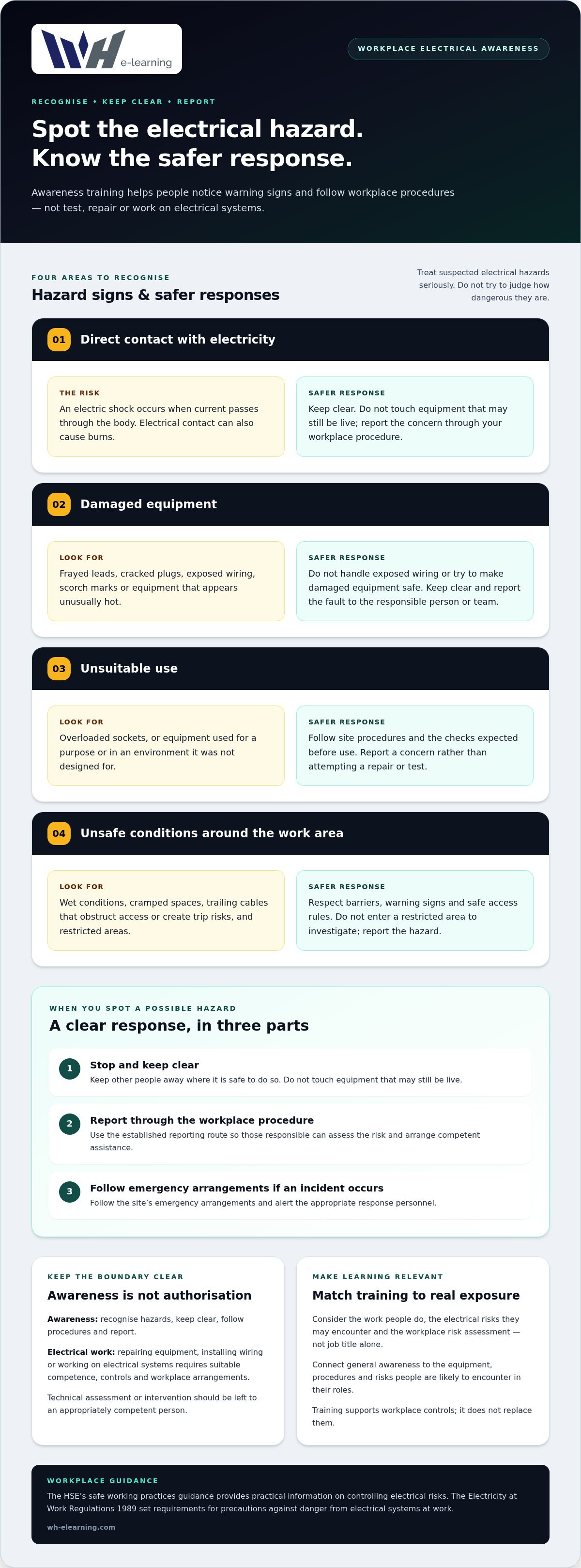
Awareness is not authorisation. Completing a course doesn’t give someone permission to repair equipment, install wiring or work on electrical systems. Those tasks require suitable competence, controls and workplace arrangements for the specific work. If a hazard needs technical assessment or intervention, employees should report it and leave the task to an appropriately competent person.
Keep the distinction clear: awareness helps people recognise and report; role-specific instruction explains safe procedures for particular duties; competent electrical work requires relevant skills and experience as well as suitable controls. Training is one part of a safe system, alongside workplace procedures, supervision and risk-based decisions.
Which electrical hazards should workplace awareness training explain?
An effective electrical safety awareness course helps employees connect everyday warning signs with sensible action. Hazards can be grouped into four areas: direct contact with electricity, damaged equipment, unsuitable use and unsafe conditions around the work area. An electric shock occurs when current passes through the body; electrical contact can also cause burns. The outcome can vary, so treat suspected hazards seriously rather than trying to judge how dangerous they are.
Recognising common electrical hazards in everyday work
Training should help people recognise signs such as frayed leads, cracked plugs, exposed wiring, scorch marks or equipment that appears unusually hot. Overloaded sockets and using equipment for a purpose or in an environment it wasn’t designed for can also create risk. Hazards may be harder to manage in wet conditions, cramped spaces or areas where trailing cables obstruct access or create trip risks.
Awareness is about noticing and responding, not testing or repairing equipment. Employees should follow site procedures and report faults to the person or team responsible. They shouldn’t handle exposed wiring or attempt to make damaged equipment safe themselves.
Understanding controls, warning signs and emergency response
Barriers and warning signs help keep people away from danger. Safe access rules clarify where entry is restricted and who may carry out work. Workplace procedures should also explain what checks employees are expected to make before using equipment and how to report defects. The HSE’s HSE safe working practices guidance provides practical information on controlling electrical risks. The Electricity at Work Regulations 1989 set requirements for precautions against danger from electrical systems at work. Training should support, not replace, suitable workplace controls.
If you spot a possible electrical hazard, stop, keep people away where it’s safe to do so, and report it through your workplace procedure. Don’t touch equipment that may still be live or enter a restricted area to investigate. If an incident occurs, follow the site’s emergency arrangements and alert the appropriate response personnel. Clear reporting helps those responsible assess the risk and arrange competent assistance.
For employers, the practical step is to connect hazard awareness with the controls and reporting routes people actually use. Workplace health and safety training can help build shared awareness, while local instructions explain how to apply it on site.
Electrical awareness training versus electrical competence: what is the difference?
Completing an electrical safety awareness course does not automatically authorise someone to carry out electrical work. Awareness helps people recognise risks and respond safely; competence means having the right knowledge, skills and experience for a particular task. Authorisation is a separate workplace decision, based on whether the person is permitted to undertake that work under the organisation’s arrangements.
The distinction is practical, not just a matter of course titles. What’s suitable depends on the task, equipment, level of risk and workplace controls. The Electricity at Work Regulations 1989 set requirements for preventing danger from electrical systems at work, but they don’t mean one specific awareness course is universally mandatory. The IET Codes of Practice provide further context for safe electrical work.
| Learning or work level | What it supports | What it doesn’t mean |
|---|---|---|
| Awareness | Recognising hazards, following site procedures and reporting concerns. | Permission or competence to repair, install or test electrical systems. |
| Role-specific instruction | Understanding procedures, equipment and controls for assigned duties. | Automatic authorisation for tasks beyond the person’s training and role. |
| Competent electrical work | Carrying out defined electrical tasks with appropriate knowledge, skills and experience, under suitable arrangements. | A blanket approval to undertake every type of electrical work. |
What awareness training supports, and where its limits begin
Awareness supports better choices: recognise a warning sign, avoid a risky action and report the problem promptly. It doesn’t replace task-specific instruction, suitable supervision or technical competence. For example, an employee who finds a damaged plug should stop using the equipment and report it through the workplace procedure, not attempt a repair because they’ve completed awareness training.
When workers should stop and involve a competent person
Uncertainty, visible damage or unfamiliar equipment are clear reasons to stop and follow the escalation procedure. Don’t remove covers, test circuits or carry out work you aren’t trained and authorised to do. Keep others away if it’s safe to do so, then report the concern. A competent person can assess what the task requires and work within the relevant workplace controls.
Employers should make these boundaries easy to understand: explain who receives reports, who can assess faults and who may undertake specific work. That way, training builds confidence to act safely without encouraging people to exceed their role.
How can employers turn electrical safety awareness into safer behaviour?
Training has most value when employees can apply it to the risks and procedures in their own workplace. Use a straightforward cycle: identify exposure, set learning goals, train, reinforce the agreed procedures and review what’s working. This keeps an electrical safety awareness course connected to everyday decisions rather than treating completion as the end of the process.
A practical sequence for planning team awareness training
Start with the organisation’s risk assessment. Map roles and tasks to the electrical hazards employees could encounter, then set clear objectives around recognising warning signs, reporting concerns and following established controls. For example, a team may need to know how to respond to damaged equipment, who receives reports and what to do if access to an area is restricted.
Next, choose an accessible way to deliver learning and explain how it relates to local arrangements. Online training can help distributed teams access consistent material; captions and language support can make learning more accessible to varied workforces. Record participation through the organisation’s usual administrative processes, but be clear about what those records show.
A training record shows that learning was completed; it doesn’t prove that safe practice is happening at work. Nor does it establish someone’s competence or authorisation to carry out electrical tasks. Those require separate consideration based on the role, task and workplace arrangements.
How to reinforce learning after the course
Make the learning visible in normal work. Managers and supervisors can revisit key points during briefings, toolbox talks and team reminders, using relevant workplace examples. Check that employees know where to report a concern, how to find site instructions and when to pause work and seek guidance. Supervision should reinforce safe behaviour, not just check attendance.
Then review what happens in practice. Administrative tracking can help managers see who has completed assigned learning and identify follow-up needs. Also consider reports, incidents and near misses, as well as changes to tasks, equipment or work areas. These may reveal that procedures need clearer communication or that further learning is useful. Keep emergency arrangements in the same loop so employees know how to act if an electrical incident occurs.
With this approach, training becomes part of a continuing safety process: prepare people, reinforce expectations and learn from workplace experience. Explore workplace health and safety training to support structured learning across your team.
How can online electrical safety awareness training support your workforce?
Online learning can help organisations give employees in different locations a consistent foundation in electrical hazard awareness. It can also make it easier to fit training around work schedules, rather than gathering every team in one place. A flexible format supports shared learning, but it doesn’t replace local site instructions, supervision or task-specific arrangements.
Online learning for individuals and distributed teams
Video-based workplace learning gives employees a clear way to work through key ideas on different devices. Closed captions can support accessibility, while machine translation into more than 25 languages can help make learning accessible to varied teams. WH eLearning’s library covers more than 100 workplace learning topics, including health and safety training.
Use online learning to establish shared awareness, then explain how that learning applies at each workplace. Employees still need to know local reporting routes, restricted areas and emergency arrangements. Where a task requires practical instruction or supervision, online study alone isn’t a substitute. The format supports awareness; employers remain responsible for setting out relevant workplace procedures and arrangements.
Organising and tracking workforce learning
For managers, administrative tools can help track learner progress and compliance status, making it easier to see participation and identify follow-up needs across a team. These records support training administration, but they shouldn’t be treated as evidence that someone is competent to perform electrical work or that safe behaviour is consistently in place.
Different teams may benefit from different learning formats. Online courses can provide flexible access to shared content, while in-house face-to-face sessions delivered by industry specialists offer another way to support workforce learning. Whichever format is used, connect it to workplace guidance and reinforce key messages through supervision and team communication.
If you’re planning learning for individuals or a wider workforce, explore WH eLearning’s workplace training and consider how accessible learning can support your wider training approach.
Build safer habits into everyday work
An electrical safety awareness course can help employees recognise hazards, follow workplace procedures and report concerns promptly. Its value depends on matching learning to actual risks and reinforcing it through clear instructions and supervision. Awareness supports safer decisions; it doesn’t qualify someone to carry out electrical work.
Flexible learning can help individuals and distributed teams access consistent training. WH eLearning offers more than 100 workplace courses across health and safety, compliance and other topics, with video-based learning, closed captions and machine translation into more than 25 languages. Organisations can also use administrative features to track learner progress and compliance status.
Take a practical next step by exploring learning that can support your workforce and wider training needs. Explore WH eLearning’s workplace training, then connect learning to the procedures employees use every day. Clear guidance and regular reinforcement help teams build safer habits with confidence.
Frequently Asked Questions
Is an electrical safety awareness course a legal requirement in the UK?
UK law doesn’t prescribe one specific electrical safety awareness course for every worker. Employers must manage electrical risks and provide suitable information, instruction and training in light of the work and hazards involved. The Electricity at Work Regulations 1989 set requirements for preventing danger from electrical systems at work. Employers should use their risk assessment to decide what learning is appropriate for their workforce and workplace.
What does an electrical safety awareness course cover?
An electrical safety awareness course typically helps learners recognise hazards such as damaged cables, exposed wiring, overloaded sockets and equipment showing signs of overheating. It should explain how to follow site procedures, avoid unsafe use and report concerns through the correct route. Learning may also cover warning signs, restricted areas and emergency arrangements. Awareness training doesn’t teach or authorise learners to repair, install or test electrical systems.
Who should take electrical safety awareness training?
Training may be relevant to anyone whose work could expose them to electrical hazards. This can include office staff using electrical equipment, employees near temporary supplies or restricted work areas, and supervisors who communicate controls or arrange assistance. The right level depends on tasks and workplace risks, not job title alone. Employers should use their risk assessment to identify who needs awareness learning and tailor it to their working environment.
Does an electrical safety awareness course qualify me to do electrical work?
No. Awareness training supports hazard recognition, safe choices and reporting, but completing a course doesn’t establish the technical competence or workplace authorisation needed to carry out electrical work. Requirements depend on the task, equipment, risks and work arrangements. Don’t remove covers, test circuits or attempt repairs unless you’re suitably competent and authorised. If you’re unsure, stop and follow your workplace procedure to involve a competent person.
Can electrical safety awareness training be completed online?
Yes. Online learning can give individuals and distributed teams flexible access to consistent awareness training, but it doesn’t replace site-specific instructions, practical task arrangements or supervision. WH eLearning provides video-based workplace courses that learners can access on different devices, with closed captions and machine translation into more than 25 languages. Employers should connect the learning to their own hazards, reporting routes and emergency procedures.
How often should electrical safety awareness training be refreshed?
There isn’t one refresh interval that suits every workplace. Employers should review learning in line with their risks and arrangements, and consider a refresher when tasks, equipment or work areas change, or when incidents, near misses or observed gaps show that key procedures need reinforcing. Keep the content relevant to the hazards employees may encounter. Training records can help track participation, but don’t demonstrate competence or safe practice by themselves.


