

A safety committee makes a difference when its decisions reach the people doing the work. To learn how to lead a safety committee effectively, set a clear written purpose, define each member’s responsibilities and agree practical goals the group can track. Make training and communication part of the committee’s routine, not an afterthought.
Meetings can easily become focused on reports and actions while safety messages fail to reach every department or shift. An effective committee connects workplace concerns with clear next steps, gives employees a way to raise hazards and shares what has changed as a result.
This guide explains how to define the committee’s mission, involve departments, give members the time and information they need, and strengthen safety training and communication. Use these practical approaches to keep discussions focused and turn agreed actions into visible progress across the workplace.
Key Takeaways
- Give the committee a written purpose, clear responsibilities and goals it can track.
- Bring workers, supervisors and managers into discussions, with a route for concerns to reach decision-makers.
- Use focused meetings, relevant incident information and practical training to turn discussions into action.
- Share safety updates and meeting outcomes so employees across departments and shifts know what happens next.
1. Defining a committee’s mission, roles, and goals
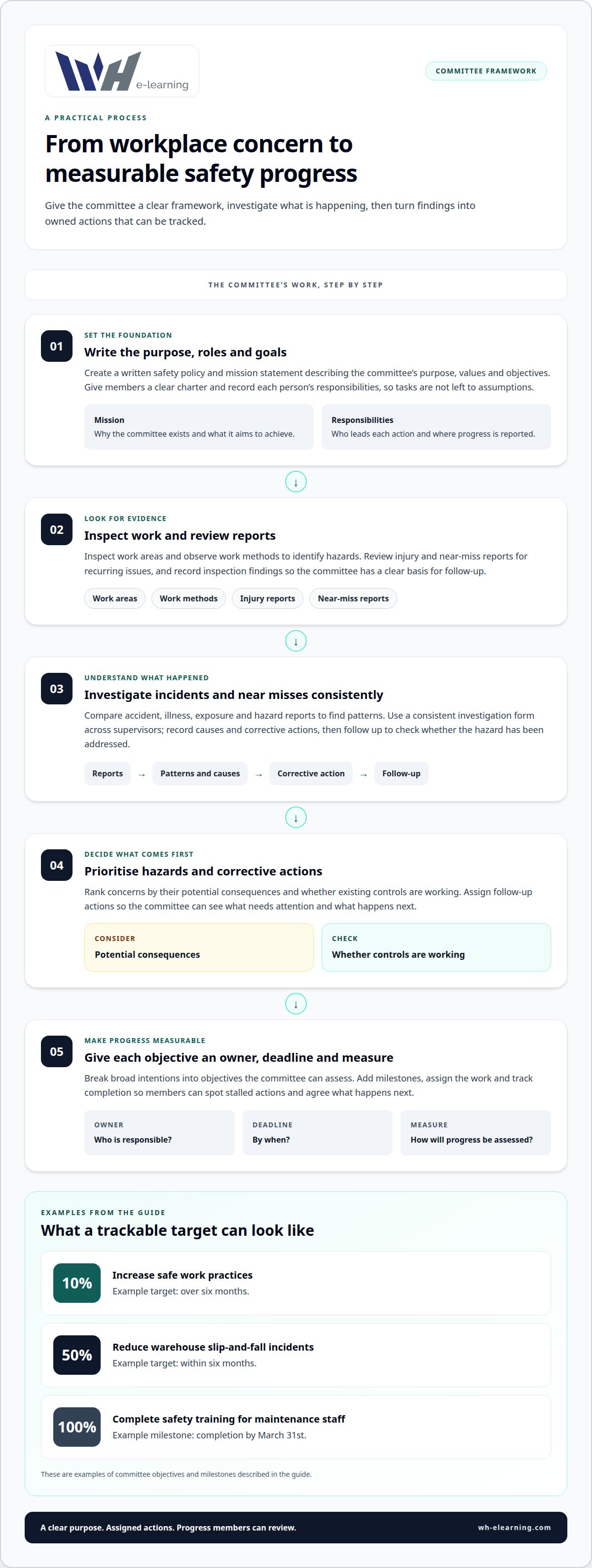
A practical approach to how to lead a safety committee effectively starts with a written policy outlining the workplace safety programme. Add a mission statement that explains its purpose, values and objectives. Give members a clear charter, then record each person’s chosen responsibilities so tasks don’t become assumptions. A simple flow chart can show who leads each action and where progress is reported.
National regulatory authorities do not always mandate safety committees for every private-sector employer. A committee can assess the organisation’s compliance with standard safety regulations, while a written policy and mission statement give members a practical framework for their work.
Identify hazards and prioritise corrective actions by inspecting work areas and observing work methods. Record findings, assign follow-up actions and review injury and near-miss reports for recurring issues. Prioritise concerns according to their potential consequences and whether existing controls are working.
Investigate incidents and near misses by reviewing accident, illness, exposure and hazard reports for patterns. Use a consistent investigation form across supervisors so reports are easier to compare. Record causes and corrective actions, then follow up to establish whether the hazard has been addressed.
Turn broad intentions into measurable objectives with an owner, a deadline and a way to assess progress. For example, a committee could aim to increase safe work practices by 10% over six months, or reduce warehouse slip-and-fall incidents by 50% within six months. These targets link committee efforts to workplace conditions and support useful analysis.
Break each objective into milestones. A goal could be 100% completion of safety training for maintenance staff by March 31st, supported by assigned training and completion tracking. The committee could also aim to assess all work tasks by the first quarter of the year. A practical test of how to lead a safety committee effectively is whether members can track each step, identify stalled actions and agree what happens next.
2. Involving managers and departments in safety discussions
Build representation across the workplace, not just within the safety department. Include employees, supervisors and managers from different levels, as well as people familiar with each relevant department and shift. Workers can describe practical hazards, while managers can explain operational constraints. This mix helps committee members identify actions that work beyond the meeting room.
Choose management representatives who can authorise changes the committee agrees are needed. If a hazard requires new equipment or a revised process, the representative should be able to raise the decision with senior leaders and secure resources. Visible support matters too: managers can attend discussions, respond to recommendations and explain decisions when an action cannot proceed.
Shift patterns can exclude employees if every discussion takes place at the same time. Where needed, schedule separate meetings for different shifts, then have the committee leader share concerns and decisions between sessions. For example, a night-shift worker might report a recurring equipment issue, and the day-shift group can confirm whether it affects their work too.
Keep the agenda connected to concerns from across the facility, rather than limiting topics to management’s preferred issues. Managers can reserve 10 minutes in existing department meetings for safety topics raised by the committee. Use that time to explain a reported hazard, gather feedback and identify who will pass the information back to committee members.
Management backing should translate into practical support, not just approval in principle. Agree how the committee can request time, relevant information, meeting space and resources for corrective actions. A 2008 study found that organisations with more hourly workers than managers on safety committees had lower injury and illness rates. Managers who need stronger safety knowledge can use health and safety training courses to support informed discussions and decisions.
3. Providing time, data, training, and meeting space
Protect committee members’ time by agreeing a regular meeting slot and providing a suitable room. Schedule meetings monthly, quarterly or bi-weekly, based on committee workload and open actions. Keep each meeting to an hour or less; around 30 minutes can work when the agenda is focused. Share the time and location in advance so members can plan their responsibilities.
Elect a meeting leader and a secretary to keep discussions productive and records accurate. The leader guides each agenda item, invites members to raise concerns and confirms decisions before moving on. The secretary records actions, owners and follow-up dates. A safety department representative can attend to offer technical guidance, answer regulatory questions and help the group stay on track without directing its work.
Prepare and circulate an agenda before each meeting. Include time for incident reviews, procedure updates, training requirements and hazard assessments. Put urgent safety and health concerns near the top, and give each item a clear purpose: share information, agree an action or review progress. This structure helps members prepare and keeps routine updates from crowding out decisions.
Give members relevant information before asking them to set priorities. Reviewing injury and incident data from the previous 12-24 months can reveal patterns and help focus committee efforts. A training calendar can track regular learning for workers at different experience levels. Members can also receive training to assist with accident investigations and regulatory inspections, supporting more informed discussions.
If different shifts make one meeting time impractical, schedule separate sessions. Ask the leader to carry questions and decisions between sessions, and give each shift a way to raise concerns. Use a shared action record so members can see what was agreed, who owns each task and what needs attention at the next meeting. Reserve a quiet space where attendees can review reports and speak without interruption.
4. Safety training and communication
Make communication part of the safety programme, not an update reserved for committee meetings. Share minutes with everyone in the organisation, including workers on different shifts. Record each agreed action, its owner and the next update so employees can see how a concern moves from discussion to response. This visibility also helps members spot actions that need follow-up.
How can a safety committee encourage employee participation and hazard reporting? Invite workers to share ideas without fear of criticism or dismissal, and make reporting straightforward. Members can wear badges or tags so employees know whom to approach. A find-it/fix-it incentive programme can also encourage workers to report and correct hazards.
Use training to turn safety knowledge into practical behaviour. Provide safety orientation to all workers, especially new employees, so they understand workplace hazards and how to perform their duties safely. A training calendar helps the organisation plan learning for workers at different experience levels. For example, a short team discussion can connect a recent near miss with the relevant safe work procedure.
Choose communication methods that help people understand, remember and act. A committee could invite an employee from any level to attend a meeting as a guest, bringing a direct view of work practices into the discussion. For a vehicle-safety topic, members might demonstrate stopping distance at 25 mph, 30 mph and 40 mph, then discuss how speed affects risk. Digital tools can give committee members access to shared materials and resources 24 hours a day, seven days a week. After each activity, ask workers what hazards they notice and how they would report them. That feedback helps the committee keep its efforts proactive and relevant.
WH eLearning: Health and Safety Training Courses
WH eLearning offers Health and Safety Training Courses to support workplace learning alongside a committee’s practical actions. Its video-based online courses are accredited and accessible on any device, helping organisations build safety knowledge around their training needs. Closed captions and machine translation into more than 25 languages can make course content more accessible to diverse teams.
Choose training that reflects the hazards, roles and procedures workers encounter in their daily work. Where a group benefits from in-person learning, WH eLearning offers In-House Face-to-Face Training. Multi-language Course Translation can support communication across language groups, while HR and Business Compliance Courses cover related workplace learning needs.
Contact WH eLearning to discuss training options for your organisation.
Turn committee decisions into everyday practice
Make learning part of work planning, not an occasional response to incidents. Use each new concern to identify the knowledge or skills that could help workers act safely, then build those lessons into routine conversations and onboarding. This keeps prevention visible between meetings and gives employees practical ways to contribute.
A useful test of how to lead a safety committee effectively is whether people can apply its decisions in their daily roles. Match learning to the people involved: IOSH Managing Safely Online can support managers, while IOSH Working Safely Online and other Health and Safety Training Courses support wider workplace learning. Keep the focus on skills relevant to employees’ tasks.
To discuss training that supports your organisation’s safety aims, contact WH eLearning. Each practical learning step can help your committee build lasting momentum.
Frequently Asked Questions
What are the key responsibilities of an effective workplace safety committee?
An effective committee turns employee concerns into actions, then checks whether agreed changes work in practice. For example, after a workstation adjustment, members can ask affected workers whether the change resolved the issue. Communicate outstanding concerns to those who can act on them, rather than treating a recorded recommendation as a completed fix.
How should a safety committee be structured and who should participate?
Include people with first-hand knowledge of different tasks, alongside representatives who can explain operational decisions. A warehouse worker, a maintenance colleague and a supervisor may each notice different aspects of the same hazard. Make space for quieter participants to contribute, and invite an employee to a discussion when their experience could clarify a particular concern.
How often should a safety committee meet and how long should meetings last?
Set a recurring schedule that gives members time to review open actions, then adjust the frequency to the committee’s workload. Keep routine meetings focused and within the agreed time limit. Hold an additional discussion after a major safety incident or when a serious concern arises, so members can address emerging issues without waiting for the next scheduled meeting.
What training do safety committee members need?
Match training to the tasks members are expected to perform. A member who helps review incidents needs relevant investigation knowledge; someone leading workplace discussions benefits from listening, recording concerns and guiding a group towards clear actions. Identify where members lack confidence, then use that assessment to choose learning suited to their committee responsibilities.
How should a safety committee set goals and track safety performance?
Track completed actions and the workplace results they are meant to achieve. For example, record whether a corrective measure was installed, then review whether reports related to that hazard continue. Keep the evidence, status and next decision together in an action log. This helps members distinguish a finished task from an effective improvement.
What is the best way to run productive safety committee meetings?
Prepare materials before the meeting and ask members to flag points that need a decision. During discussion, separate urgent matters from updates, record decisions in plain language and confirm who will communicate them. End by reviewing unresolved actions and their owners. This gives attendees a shared record and a clear starting point for the next session.


